

X-P700
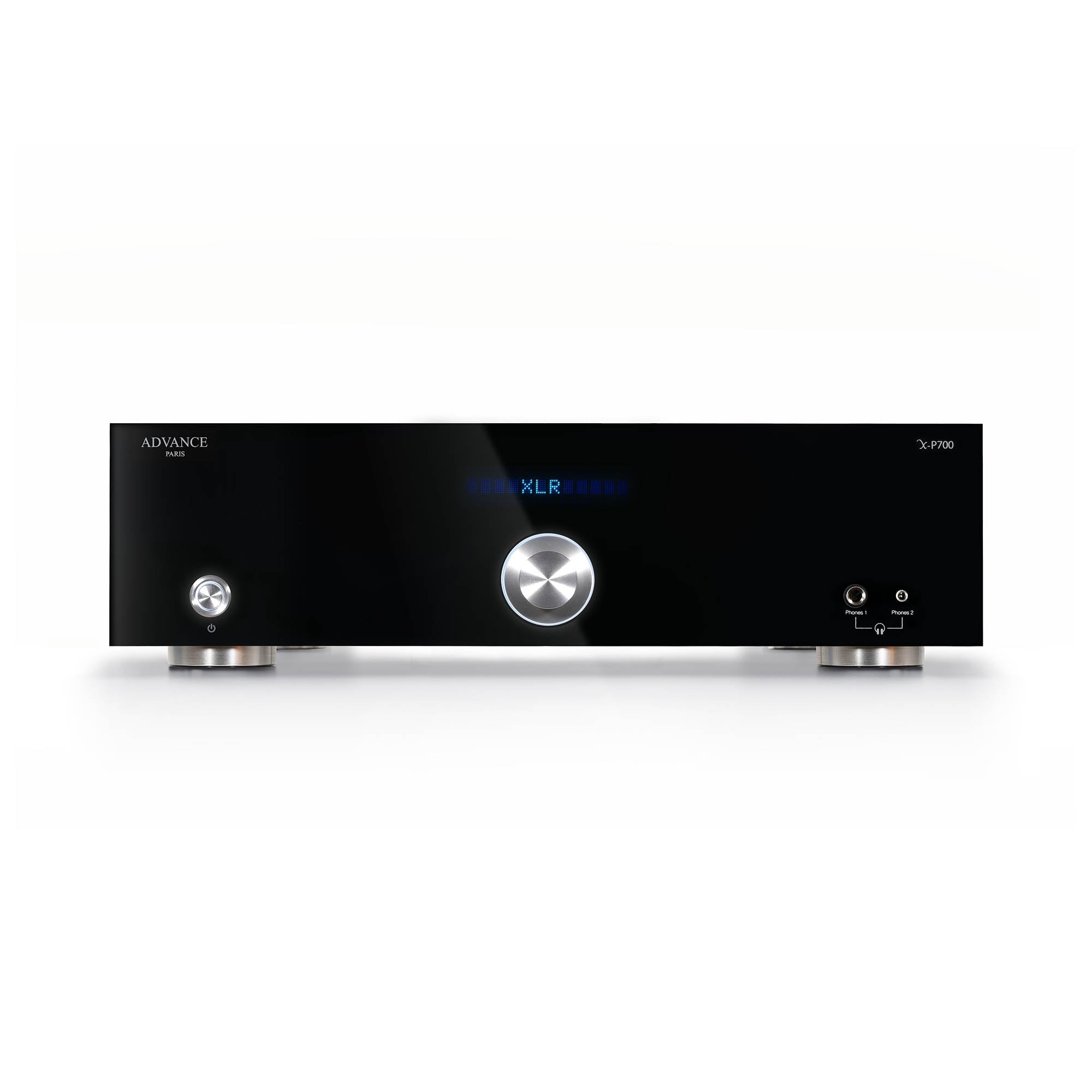
X‑P700 stands as a refined stereo preamplifier that blends dual‑mono clarity with balanced analogue warmth, creating a sound that feels open, detailed, and naturally expressive. With thoughtful design and a comprehensive set of inputs, it lets music breathe with nuance and presence, inviting immersive listening at every turn. A sophisticated centrepiece for audiophile systems seeking clarity, control, and musicality.
Pairs well with
Try & Buy at local dealers
2-Year Warranty
Ships within 1-2 business days.
Product Highlights

Signal-to-noise ratio

Frequency Response

Phono stage

Product Weight
X-P700
If you have any questions, you are always welcome to contact us. We'll get back to you as soon as possible, within 24 hours on weekdays.
-
Shipping Information
Use this text to answer questions in as much detail as possible for your customers.
-
Customer Support
Use this text to answer questions in as much detail as possible for your customers.
-
FAQ’s
Use this text to answer questions in as much detail as possible for your customers.
-
Contact Us
Use this text to answer questions in as much detail as possible for your customers.
Control that elevates musical expression
X-P700 is a pre-amplifier built for listeners who want both refinement and choice. As the successor to the X-P500, it introduces technical solutions rarely seen in this class, focusing on signal purity, channel separation, and flexibility of operation. It is designed to sit at the centre of demanding systems, shaping the signal with precision before it reaches the power amplification stage.
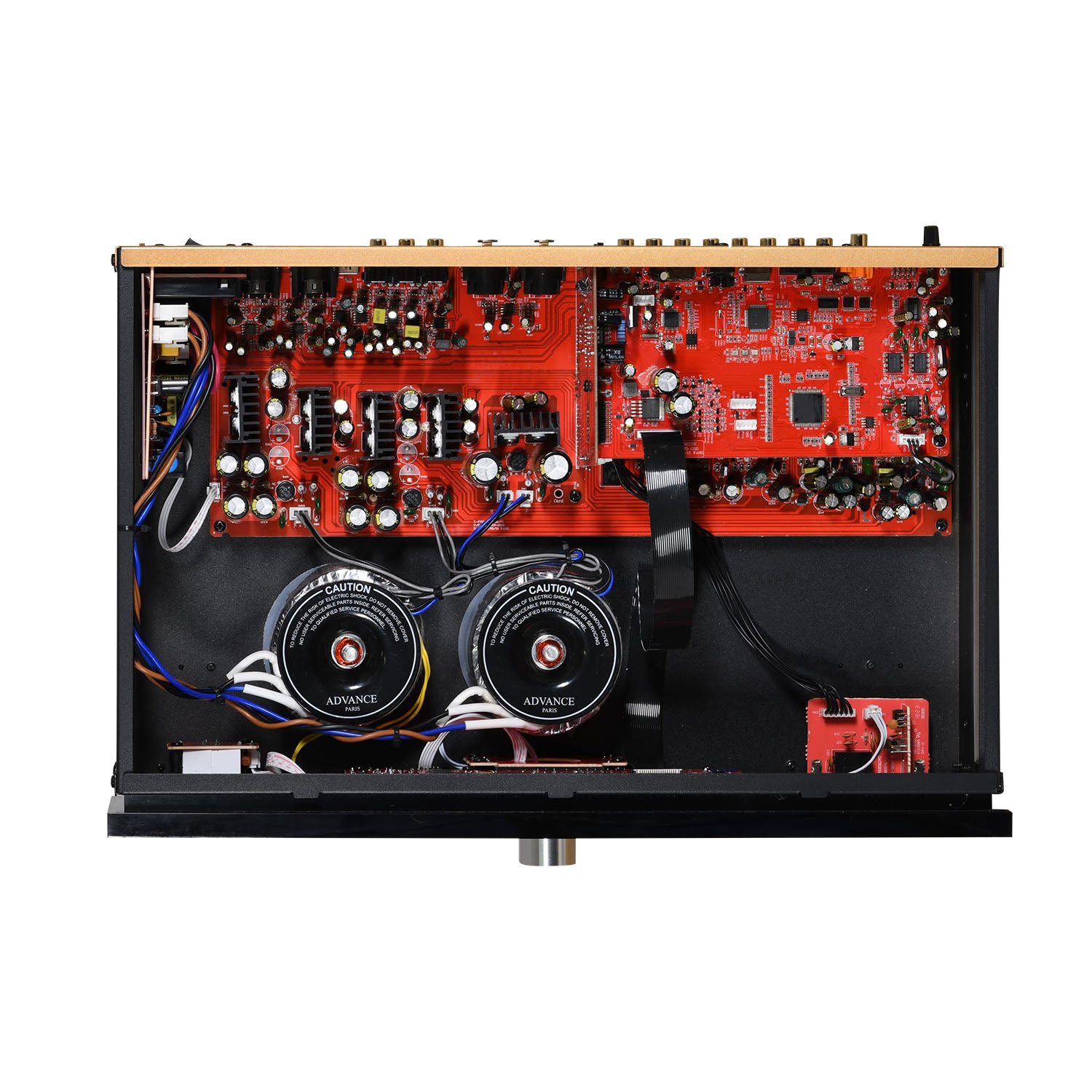
At its core, X-P700 is built around a true dual mono architecture. Left and right channels are treated independently, with two high-capacity toroidal transformers feeding a fully filtered and regulated power supply. The preamplification stages are integrated on the motherboard in a way that preserves isolation between channels, maintaining stability and spatial accuracy even in complex musical passages.
Signal processing is kept as direct as possible through the Direct Path approach, minimising unnecessary circuitry. X-P700 also allows the listener to choose between two distinct output schematics. Class A mode uses bipolar devices in a double cascade circuit, delivering a smooth and continuous presentation inspired by tube-like behaviour. Discrete Mode is based on a JFet differential stage with current mirrors in bipolar devices, operating in a more traditional Class AB configuration. This choice allows the pre-amplifier to adapt to system synergy and personal listening preferences.
CLASSIC LINE
Where every note comes alive
Classic Line represents Advance Paris’ dedication to musical integrity across its range. The focus is not on excess or complexity for its own sake, but on how music flows, how dynamics breathe, and how a system can convey emotion without fatigue. Components in the Classic Line are designed to feel intuitive and natural, encouraging long listening sessions where the equipment fades into the background.
Within this philosophy, X-P700 takes on a particularly expressive role. As a pre-amplifier, it becomes the system’s point of decision, controlling both signal routing and tonal behaviour with care. Its dual mono design, Direct Path signal handling, and selectable output topology reflect the Classic Line emphasis on purity combined with musical engagement.

Design that speaks to presence and precision
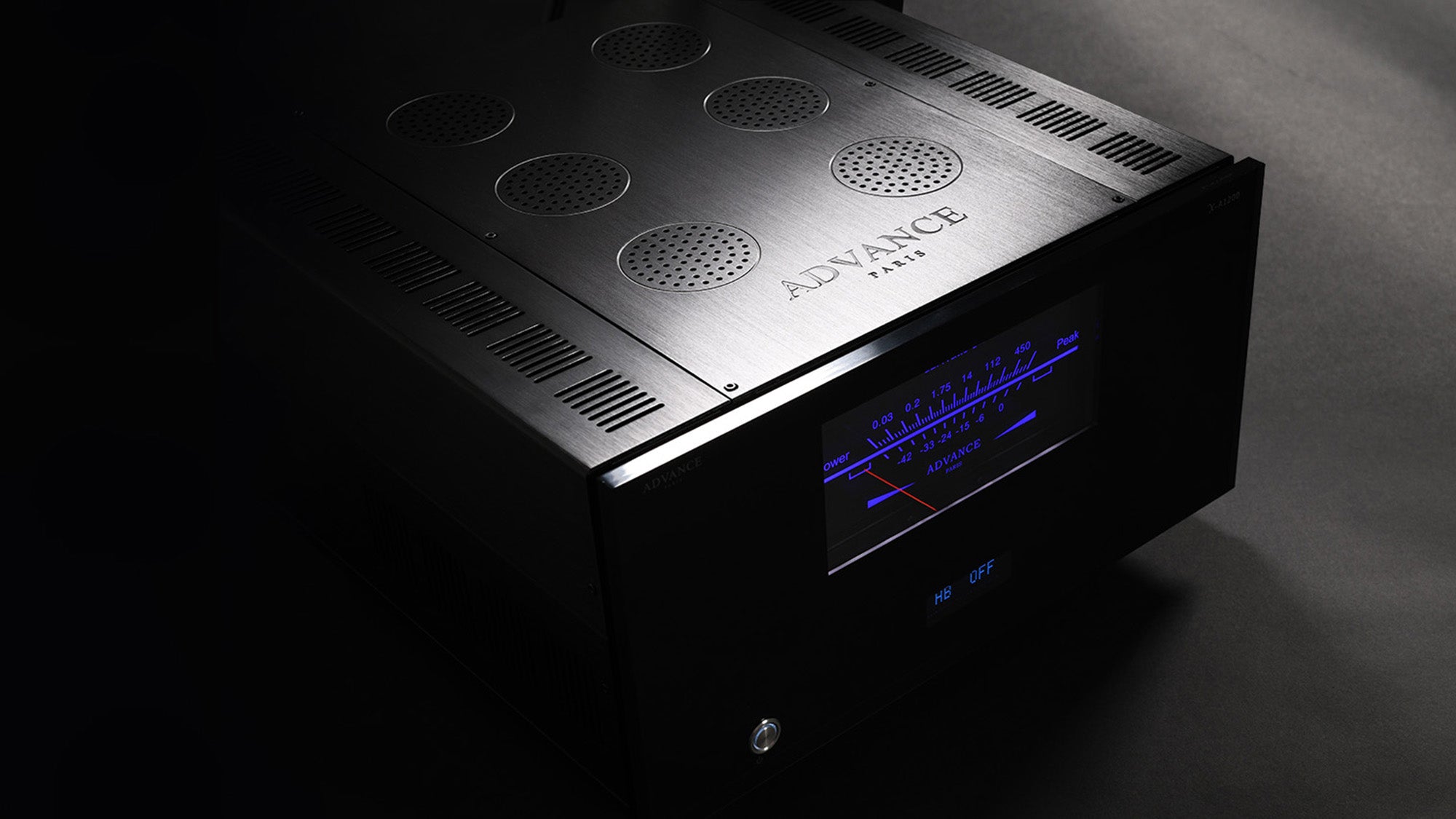
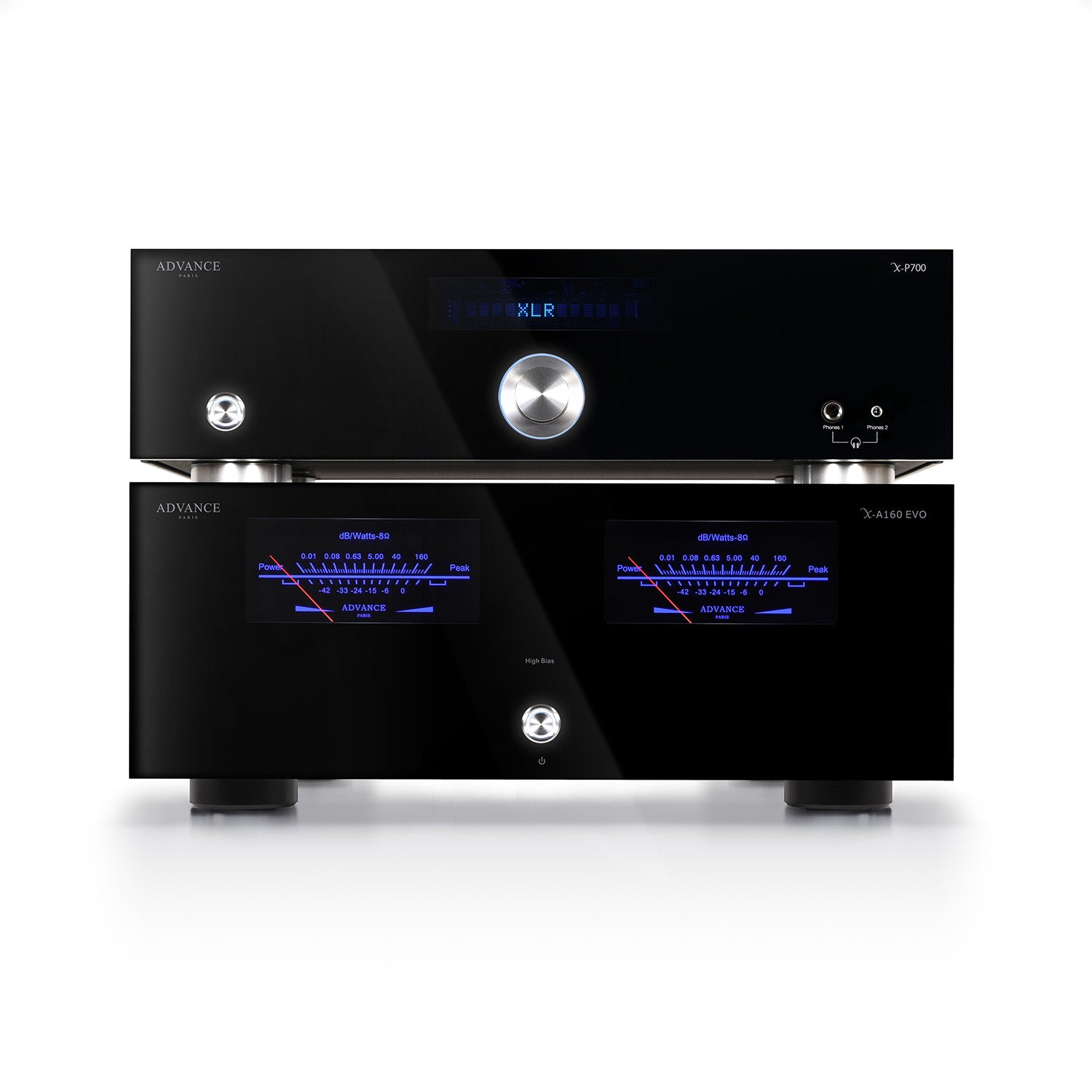
X-P700 presents itself with a sober and uncluttered aesthetic. The 10 millimetre black methacrylate front panel, shared across the Classic Line, gives the pre-amplifier a strong and coherent visual identity. Operation is centred around a single rotary control and a push button used to validate selections, creating a clean interface that feels deliberate and composed.
Through this interface, the user can access inputs, volume control, bass and treble adjustment, balance, and intensity settings. All functions can also be controlled via the supplied remote, allowing full operation without disrupting the listening experience.
Internally, construction quality reinforces the sense of seriousness. Power supply sections, signal paths, and preamplification stages are arranged to support stability and isolation. The result is a pre-amplifier that feels both technically assured and refined in daily use, with design choices that support longevity as much as immediate performance.
Essential connections for optimal performance
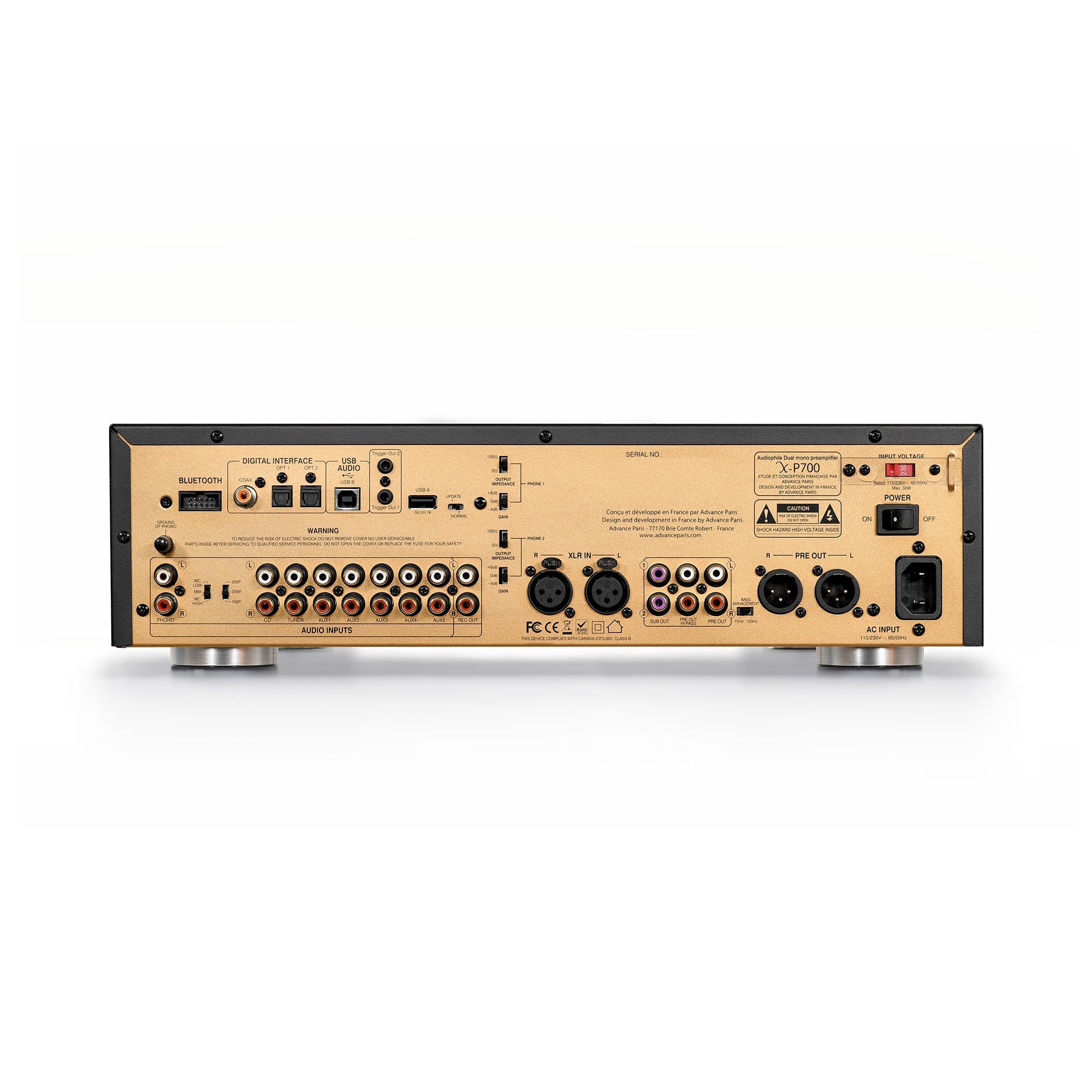
X-P1200 is equipped to anchor advanced audio systems. It offers nine analog inputs, including balanced XLR connections, alongside a comprehensive digital section. Digital connectivity includes a USB B input based on XMOS technology, two coaxial digital inputs, and two optical digital inputs, ensuring flexibility for modern sources.
Digital signal processing is entrusted to the Analog Devices AD1955 converter, a solution developed for high-end audio and SACD applications. With a signal-to-noise ratio of 123 decibels, a sigma delta multibit modulator, high-performance digital interpolation filters, and a continuous-time differential current output, it delivers digital to analog conversion of exceptional clarity and precision.
Playback of audio files from PC and Mac systems is handled by the XMOS platform, widely recognised for its accuracy and stability in high-resolution audio reproduction. Output options include both balanced XLR and unbalanced RCA connections, allowing seamless integration with a wide range of power amplifiers.
Specifications
Performance
Connectivity
Dimensions
Included in the Box

X-P700 Preamplifier

Power Cable

Remote control

Quick Start Guide

Safety Instruction Manual


FAQ's
The most common questions about preamplifiers, answered.
What does a preamplifier actually do in a hi-fi system?
A separate preamplifier allows the low-level audio signal to be handled in isolation from the high-current demands of power amplification. In an integrated amplifier, both sections share enclosure space and power supply architecture. When separated, electrical interference is reduced, noise floors can be lowered, and gain stages can be optimized specifically for signal purity rather than power delivery.
In practice, this often results in improved spatial definition, more stable imaging, greater dynamic contrast, and a deeper sense of control. Advance Paris preamplifiers are built with carefully regulated power supplies and isolated circuit layouts to ensure that delicate signal information remains intact before it reaches the power amplifier.
How much does a preamplifier influence the overall sound character?
More than many listeners initially expect. Because the preamplifier works with very small signal voltages, any instability, noise, or coloration introduced at this stage will be amplified downstream. The architecture, component quality, and gain structure therefore have a profound effect on tonal balance, microdetail, and dimensionality.
Advance Paris incorporates hybrid designs in several models, combining vacuum tube stages with solid-state circuitry. This approach allows harmonic richness and natural fluidity to coexist with precision and control. The result is not exaggerated warmth, but a sense of openness, texture, and continuity between quiet passages and dynamic peaks.
Why are balanced XLR connections important in a preamplifier?
Balanced connections help reject external noise and interference, especially in systems with longer cable runs or high-resolution components. They also allow for improved signal symmetry and can support higher output levels with lower noise.
Select Advance Paris preamplifiers feature true balanced architectures rather than simply balanced connectors. This ensures that signal integrity is maintained throughout the circuit path, preserving transient accuracy and maintaining stability in complex musical passages.
Can I combine a preamplifier with any power amplifier?
Yes. One of the key advantages of separates is flexibility. You can match gain structure, output level, and sonic character according to preference.
However, Advance Paris preamplifiers and power amplifiers are engineered to work in precise electrical and tonal harmony. When paired together, gain staging, impedance matching, and dynamic behavior are optimized to deliver coherent timing, balanced tonality, and authoritative control across the entire frequency range.
This synergy ensures that the system behaves as one unified instrument rather than two independent components.
Are separate preamplifiers only relevant for large or ultra high-end systems?
Not exclusively. While separates are often associated with reference-level systems, the advantages of signal separation, power supply isolation, and flexible system architecture can benefit many listening environments.
Advance Paris offers a broad portfolio, allowing listeners to begin with accessible models and progress toward increasingly refined performance. As systems scale in complexity and speaker demands increase, the benefits of a dedicated preamplifier become more evident with greater dimensionality, improved control, and a more lifelike musical presentation.